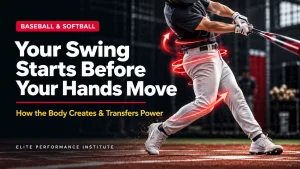
A powerful baseball or softball swing starts before the hands move. Learn how the legs, hips, pelvis, trunk, and upper body create and transfer force into the bat.
Not every painful exercise needs to be stopped. Learn how to use the Green, Yellow and Red Pain Stoplight to guide exercise, rehabilitation, and your next-day response.
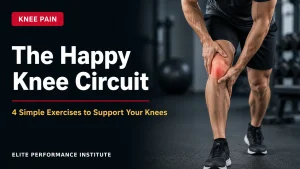
The Happy Knee Circuit is a simple four-exercise routine using an Adductor Ball Squeeze, Prone Hamstring Curl With Swiss Ball, Double Leg Calf Raise, and Anterior Tibialis Raise as a starting point for knee strengthening.
What are the best running shoes? Research increasingly supports starting with comfort and fit rather than one universal shoe type. Here is what runners should know about cushioning, pronation, heel drop, shoe rotation, and super shoes.
The Low Back Snack is a simple four-exercise routine I commonly use with patients experiencing low back pain. Learn the exercises, modifications, and how I typically program them.
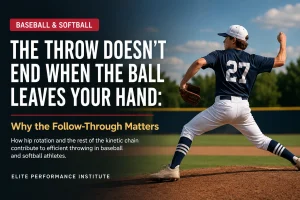
The throw does not stop when the ball leaves your hand. Learn how hip rotation, trunk motion, and the rest of the kinetic chain contribute to an efficient baseball and softball follow-through.
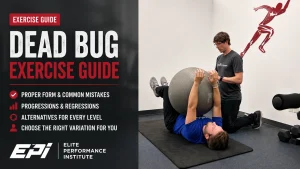
Learn how to perform the dead bug exercise correctly, avoid common mistakes, and choose the right regression, progression, or alternative based on your mobility, strength, and symptoms.
The rotator cuff does much more than rotate the shoulder. Learn how its four muscles stabilize the arm during throwing, why the entire kinetic chain matters, and when shoulder symptoms deserve attention.
An honest review of the Bob and Brad ThermoRed Heating Pad Belt Massager, including its heat, vibration, red-light features, pros, cons, and how it compares with the Hyperice Venom 2 Back.
Little League elbow is a common overuse injury in young throwing athletes. Learn the warning signs, why it develops, how it is treated, and what a safe return-to-throw process involves.
Thoracic mobility plays a major role in throwing velocity, bat speed, and rotational power in baseball and softball. Here’s why your mid-back may be the hidden limiter.
A practical guide to the best glute exercises for runners, including my favorite glute max and glute med picks, why they matter, and how to program them.
A Baseball & Softball Movement Analysis helps identify mobility, stability, and movement limitations that may be affecting throwing, hitting, power, and durability.
The best strength exercises for runners are not random. Learn how to organize runner strength work around main lifts, glutes, calves, hamstrings, core, adductors, and power exercises.
Research suggests just five minutes of progressive daily hopping may improve running economy in amateur runners. Learn what the study found and how this simple plyometric routine works.
Is the Hyperice Venom 2 Back worth the price? This review covers its heat, vibration, comfort, battery life, pros and cons, and who this premium recovery tool is best for.
A hands-on TriggerPoint MB Vibe review covering what it feels like, who it is best for, and whether this premium vibrating massage ball is worth buying.
An expert panel breaks down how to use strength training for distance runners, including lifting frequency, timing, exercise selection, and practical advice for coaches.
Long hours of sitting, working, and studying can leave the midback stiff and contribute to neck tension, shoulder discomfort, and reduced overhead motion. Here are 5 simple exercises to improve thoracic mobility and help you move better.
Should runners stretch? Here’s a more nuanced look at what the research suggests about static stretching, performance, injury prevention, soreness, and what runners may want to prioritize instead.
Strength training can help runners improve performance, increase running economy, and reduce injury risk. Learn how runners should strength train and what the research says about getting stronger.
A simple 5 minute running warm-up can help runners feel looser, move better, and start runs feeling more prepared. Here is an easy dynamic warm-up you can do anywhere.
Learn how to apply the Feed the Cats philosophy to long jump, triple jump, and high jump with a speed-first, low-volume approach that keeps athletes fresh and performing at their best.
Perfect running form is not as universal as many runners think. Here is why there is no single ideal form, why footstrike is not everything, and what actually matters more.