
Single Arm Quadruped Serratus Push Up
Original EPI video demonstration · Watch on YouTube ↗
An advanced quadruped serratus anterior progression combining one-arm support with controlled scapular protraction.
About this movement
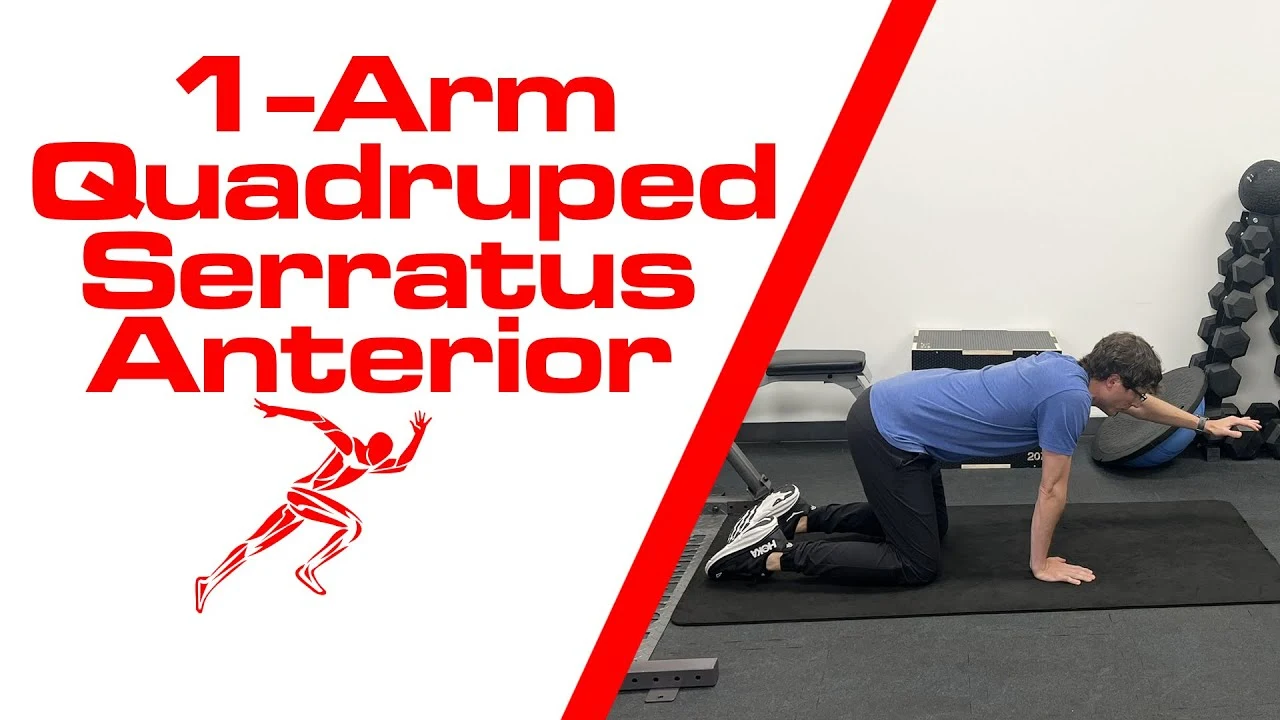
This quadruped progression places more of the bodyweight on one supporting arm while the other arm reaches forward. The supporting shoulder blade must maintain control as you actively push the floor away. Compared with a two-arm quadruped scapular push-up, it adds a meaningful anti-rotation challenge.
How to perform Single Arm Quadruped Serratus Push Up
- Begin on hands and knees with the supporting hand beneath the shoulder and the knees set wide enough for balance.
- Shift weight gently onto one hand while reaching the opposite arm forward as shown in the demonstration.
- Keep the supporting elbow straight without locking it aggressively, and brace the trunk to limit hip rotation.
- Use the supporting shoulder blade to push the floor away and control a small scapular movement without turning it into an elbow-bending push-up.
- Return smoothly, complete the repetitions, and change supporting arms.
Make every rep count
- Think “push the floor away” using the shoulder blade, not a big elbow bend.
- Keep the ribs and pelvis relatively level; avoid twisting to make the movement easier.
- Widen the knees or shorten the opposite-arm reach before sacrificing control.
How to use it
Try 2–3 sets of 5–8 slow repetitions per side, or begin with short controlled holds if necessary.
Explore related exercises
Explore related demonstrations. These are options to explore, not automatic exercise progressions.
Common questions
Is this a regular one-arm push-up?
No. It is a shoulder blade–focused movement from a hands-and-knees position; the supporting elbow stays largely straight.
How is this different from the standard quadruped scapular push-up?
Supporting more weight through one arm adds scapular stabilization and trunk anti-rotation demand.
Educational exercise information only—not an individualized diagnosis or treatment plan. Adjust activity to your tolerance and seek an assessment for persistent or concerning symptoms.