
Overhead Shoulder Stability With Resistance Band
Original EPI video demonstration · Watch on YouTube ↗
A band-resisted overhead stability drill that challenges rotator cuff and shoulder-blade control while maintaining a steady trunk.
About this movement
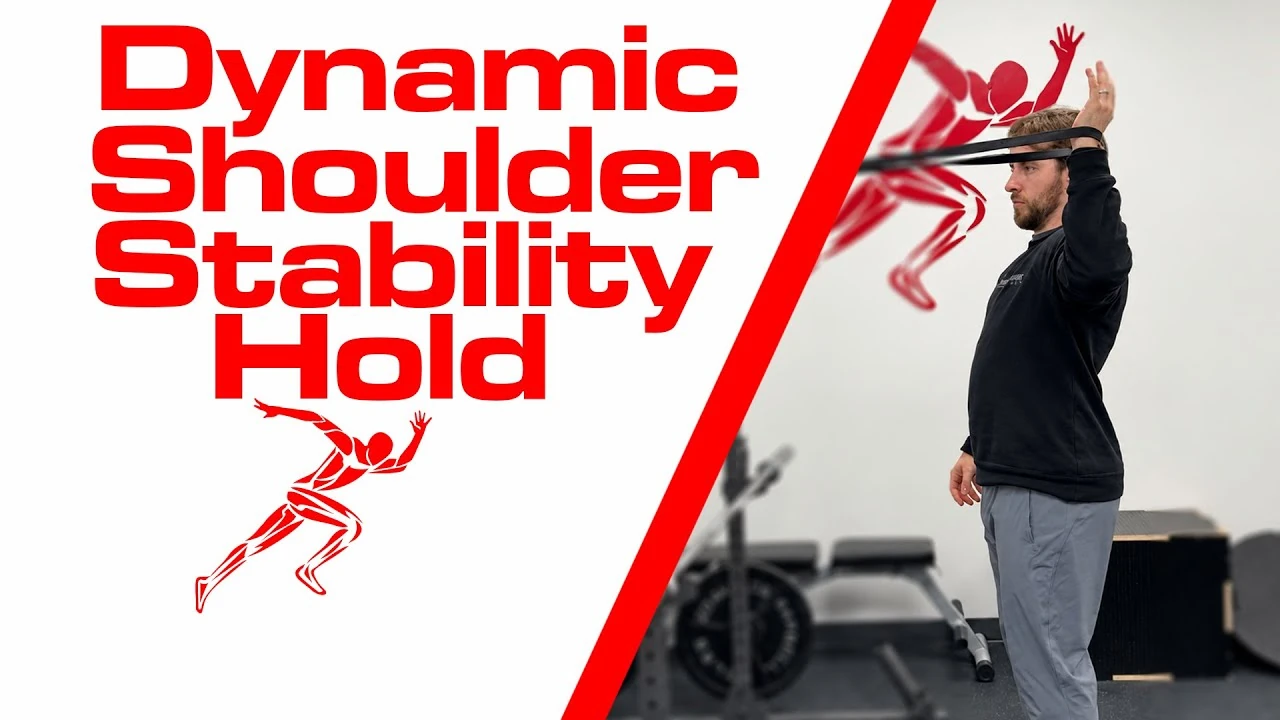
Overhead Shoulder Stability With Resistance Band challenges the shoulder to maintain a consistent overhead position while the elastic band applies a directional pull. The goal is controlled shoulder and scapular positioning—not using a stronger band at the expense of trunk or shoulder alignment.
How to perform Overhead Shoulder Stability With Resistance Band
- Secure a resistance band to a stable anchor as shown in the demonstration, and check the anchor before applying tension.
- Stand tall, take the band in the working hand, and raise the arm into a comfortable overhead position.
- Apply light band tension while keeping the ribs stacked over the pelvis and the shoulder positioned comfortably.
- Hold the overhead position steadily against the band’s pull, without leaning, shrugging excessively, or arching through the lower back.
- Return to the start with control, reset, and repeat on the opposite side.
Make every rep count
- Keep band tension manageable enough to maintain a steady arm position.
- Move through the shoulder and shoulder blade rather than compensating by arching the lumbar spine.
- Keep the neck relaxed and breathe throughout the hold.
How to use it
Try 2–3 controlled holds of 10–20 seconds per side with light resistance; progress only when alignment stays steady.
Explore related exercises
Explore related demonstrations. These are options to explore, not automatic exercise progressions.
Common questions
Is this a rotator cuff exercise or a shoulder-blade exercise?
Both contribute. The rotator cuff helps control the upper arm while the shoulder-blade muscles position and support it.
How is this different from Dynamic Shoulder Stability Hold?
Both train overhead control with elastic resistance. This guide emphasizes the overhead band position shown here; compare the demonstrations and avoid redundant programming if they are functionally the same for your goal.
Educational exercise information only—not an individualized diagnosis or treatment plan. Adjust activity to your tolerance and seek an assessment for persistent or concerning symptoms.
Equipment options
Amazon affiliate links. As an Amazon Associate I earn from qualifying purchases. Use suitable equipment you already own, or explore these options.
Choose resistance appropriate for your exercise.