
Reverse Plank March
Original EPI video demonstration · Watch on YouTube ↗
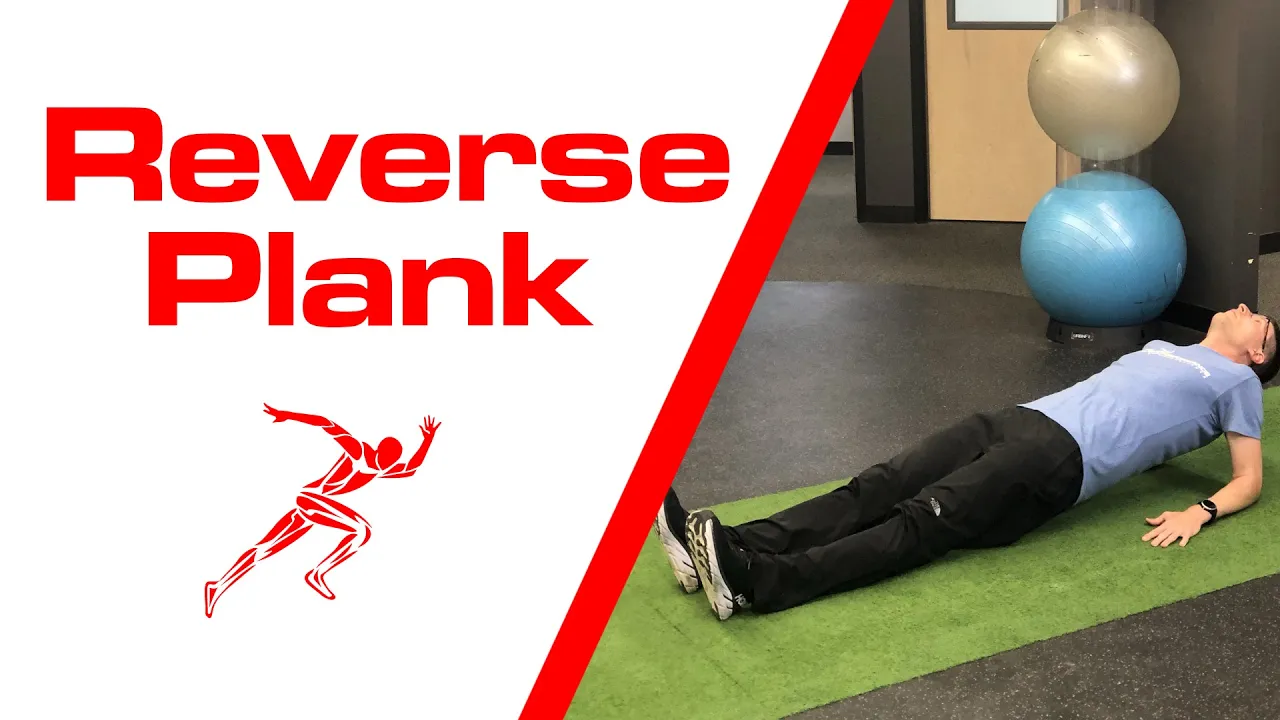
A dynamic reverse plank progression that challenges glute and hamstring strength, shoulder support, and pelvic control as you alternate knee drives.
About this movement
The Reverse Plank March combines a posterior-chain-supported plank with alternating hip flexion. Lifting a leg narrows your base of support, so the glutes, hamstrings, shoulders, and trunk must work together to resist the tendency for the pelvis to rotate or drop.
How to perform Reverse Plank March
- Sit on the floor with both legs extended and place your hands behind your hips in a comfortable supporting position.
- Press through your hands and heels to lift your hips into a reverse plank, forming a long line through your trunk and supporting leg.
- Without letting your pelvis rotate or sag, slowly lift one foot from the floor and bring that knee toward your chest.
- Lower the leg with control and reestablish a stable position before marching the opposite knee.
- Alternate sides with steady breathing, stopping the set when you can no longer keep the hips level.
Make every rep count
- Keep the chest lifted and the shoulders supported without shrugging.
- Resist the tendency for one side of the pelvis to drop as the leg leaves the floor.
- Move slowly; a smaller knee drive with steady hips is preferable to a larger, twisting march.
How to use it
Start with 2–3 sets of 5–8 alternating marches per side. Prioritize hip control over height or speed.
Explore related exercises
Explore related demonstrations. These are options to explore, not automatic exercise progressions.

Common questions
What makes this harder than a regular reverse plank?
Lifting one foot removes a point of support and challenges the trunk and pelvis to remain steady.
What if my hips drop during the march?
Pause, reset the hips, reduce the knee-lift height, or practice a basic reverse plank before progressing.
Educational exercise information only—not an individualized diagnosis or treatment plan. Adjust activity to your tolerance and seek an assessment for persistent or concerning symptoms.